
Tag: Scouting

  • Designing the Hunt—Scouting for Strategy and Safe Shooting Lanes

    From Map to Mountain: How to Strategize Your Land and Create Safe Shooting Lanes.

    By now, hopefully you’ve done your digital scouting overhead, mapped your property lines, and reviewed the camera footage to find out where the animals are moving. Once you arrive at your “honey hole,” the real work begins. Hunting isn’t just about being in the right spot; it’s about ensuring that when the moment of truth arrives, you have a clear, ethical, and safe shot.

    If you’re hunting with a group, this phase is non-negotiable. Here is how to prep the land and your team for a successful season.


    1. Ground Scouting: The “Strategy” Layer

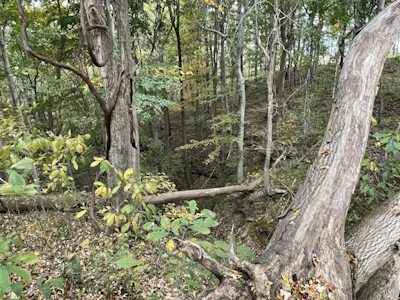
    You’ve seen the satellite imagery; now it’s time to ground-truth it. When you’re on the property, look for the “Natural Flow”:

    • The Bedroom to the Kitchen: Animals usually move from bedding areas (thick brush) to feeding areas (fields/oak flats). You want to position yourself between the two for when they come out.
    • Identify Entry/Exit Routes: A great spot is useless if you spook every animal on your walk-in. Plan a path that keeps the wind in your face and uses the terrain (like a creek bed or a ridge) to hide your silhouette with a back drop.

    2. Planning Your Shooting Lanes

    A “shooting lane” is a cleared path through the brush that gives you a window to see and shoot an animal.

    • The “360-Degree” Rule: Sit in your intended spot (stand or blind) and identify the 3–4 most likely paths an animal will take.
    • Minimalist Trimming: Don’t clear-cut the forest! You still need cover to hide your movement. Use a pair of loppers or a small folding saw to remove only the small branches that would deflect an arrow or bullet.
    • The “Window” Method: Aim to create windows at specific distances (e.g., a 20-yard window and a 40-yard window) so you don’t have to guess the range when an animal steps out.
    • Measure your distances: From your spot, count out the yardage or use a range finder to familiarize yourself with those distances.

    3. Safety First: The “Group Strategy”

    Hunting with friends is safer and more fun, but it requires clear communication. Mistakes happen when people don’t know where their partners are.

    Create a “Zone of Fire” Map

    Before the season starts, gather your group and a map of the property.

    • Assign Spots: Everyone should have a designated “Primary Stand” and a “Secondary Stand.”
    • Define Shooting Arcs: Each person must have a “Safe Zone of Fire.” For example: “I am shooting only toward the North and West; my South and East are ‘No-Shoot Zones’ because my partner is 300 yards that way.”
    • The “Check-In” Rule: Use a group text or a radio to confirm when everyone is “on-station” and when they are moving. Never move from your spot without notifying the group!!!

    Identifying Backstops

    A bullet or arrow doesn’t always stop in the animal.

    • Always identify what is behind your shooting lane.
    • Ensure your lanes are angled toward a “natural backstop,” like a hillside or a thick embankment. Never take a shot at an animal on the “skyline” (the top of a ridge), as you don’t know where that projectile will land. You’ll learn this from the online training of the best shot opportunities.

    4. The “Dry Run”

    The best way to test your strategy is a dry run.

    • Have a partner walk through the shooting lanes (wearing Blaze Orange) while you sit in the stand.
    • Practice “calling out” the distances.
    • Confirm that your partner is never in your “Zone of Fire” during their walk-in or walk-out.

    Pro Tip: Use your phone to take a photo from your seat looking down each shooting lane. Draw a circle on the photo where it is safe to shoot and text it to your group. This ensures everyone is literally on the same page.


    Summary Checklist for Group Planning:

    • [ ] Map assigned: Everyone knows their “Home Base.”
    • [ ] Lanes cleared: Just enough to see, not enough to be seen.
    • [ ] Orange is on: Even while prepping the land.
    • [ ] Communication plan: “I’m in,” “I’m out,” and “Animal down, let’s go track ’em” protocols.
  • The Moment of Truth: Making an Ethical Shot and What Happens Next…part 3 of 3

    The Moment of Truth: Making an Ethical Shot and What Happens Next…part 3 of 3

    You’ve geared up, scouted your spot, and finally, the animal you’ve been tracking appears. Your heart is racing—a phenomenon hunters call “buck fever.” This is the moment everything leads up to. But being a hunter comes with a heavy responsibility: the commitment to a quick, clean, and ethical harvest. Don’t forget to take a slow and steady breathe, calm yourself, and slowly squeeze the trigger just like you’ve been practicing at the range.

    In this final part of our “What’s Next” series, we cover the ethics of the shot and the work that begins once the hunt is over.


    1. The Ethical Shot: Know Your “No-Go”

    As a beginner, your goal isn’t just to “hit” the animal; it’s to ensure it doesn’t suffer.

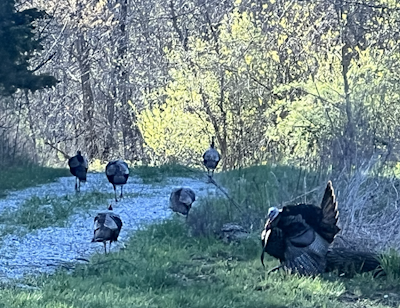
    • The Vital Zone: For most big game (like deer), the target is the heart and lungs, located just behind the front shoulder. A shot here is the most effective and humane. For a turkey, it depends on the weapon being used. If you have a shotgun, go for the head and neck. If you have a bow/crossbow, target the vital organs right where the bottom of the wing attaches to the body.
    • Wait for the “Broadside”: Never shoot an animal that is facing you directly or walking away. Wait for it to stand “broadside” (side-on) or “quartering away.” This provides the clearest path to the vitals.
    • Know Your Range: If you practiced at the range at 50 yards, do not take a 100-yard shot in the woods. Respect the animal enough to only take shots you are 100% confident in.

    2. The Wait (The Most Important 30 Minutes)

    After you take the shot, the instinct is to run over immediately. Don’t.

    • Even with a perfect shot, an animal’s adrenaline can carry it a short distance. If you chase it immediately, you might “bump” it, causing it to run much further.
    • Sit down, take a deep breath, and wait at least 20–30 minutes. Listen for crashing or a final “struggle.” Note exactly where the animal was standing when you shot.

    3. Tracking and Recovery

    • Check for Sign: Look for the “blood trail.” The color and consistency can tell you a lot about the hit.
    • Mark Your Progress: If the trail is faint, use biodegradable flagging tape or digital pins on your app to mark the last spot you saw blood.
    • Slow and Steady: Move quietly while tracking. Sometimes the animal is just over the next ridge.

    4. The Work Begins: Field Dressing

    Once you’ve recovered the animal, the clock starts. You need to cool the meat down as quickly as possible to ensure it’s safe to eat.

    • Tag It First: Before you touch your knife, attach your tag/permit as required by law.
    • Take Your Time: Field dressing (removing the internal organs) is a skill. If it’s your first time, have a YouTube video saved for offline viewing or, better yet, have a mentor guide you.
    • Keep it Clean: Use your gloves and try to keep the interior of the chest cavity free of dirt and hair.

    The Hunter’s Code: Every hunter feels a mix of emotions after a successful hunt—joy, relief, and often a deep sense of somber respect for the animal. This is normal. Honoring that animal by utilizing as much of the meat as possible is the highest form of respect you can show.

    Welcome to the club. There is so much more to share about so many topics. We are happy to keep providing what has worked or not worked for us out in the field.

    We look forward to engaging, sharing stories, and determining what you’d like to hear more on. Feel free to engage via email or any form of social media we’ve started.

  • Don’t Just Walk Into the Woods: A Beginner’s Guide to Digital and Boot Scouting…part 2 of 3

    Don’t Just Walk Into the Woods: A Beginner’s Guide to Digital and Boot Scouting…part 2 of 3

    The biggest mistake new hunters make? Walking into the woods on opening morning, picking a random tree, and hoping for the best. While luck plays a part, successful hunters aren’t lucky—they’re prepared. Finding where the animals are before the season starts is called scouting, and it’s the secret to a filled freezer.

    Most beginners think hunting is about the “shot,” but 90% of hunting is actually just the “search.”

    Here is how to find your spot in two simple phases: The Couch and The Woods.

    Phase 1: “E-Scouting” (The Couch Phase)

    Before you put on your boots, pull out your smartphone. Apps like onX Hunt, HuntStand, or even Google Earth are your best friends. You are looking for three things: Food, Water, and Cover.

    • Identify Boundaries: First, ensure you know where public land ends and private land begins. For private land hunters, find your property lines so you know how far you can go or when to not take the shot in case the animal darts across lines.
    • Look for “Edges”: Animals love edges—where a thick forest meets a grassy field, or where a pine thicket meets a hardwood ridge. Look for these transitions on satellite maps.
    • Find the Funnels or Choke points: Look for “pinched” areas of woods between two fields or a narrow strip of land between two lakes. Animals will naturally travel through these “bottlenecks” to stay hidden.

    Phase 2: “Boot Scouting” (The Woods Phase)

    Once you’ve marked 2–3 interesting spots on your map, it’s time to go for a hike during the offseason. Your goal is to find “fresh signs” of animal migration.

    • The Scat Map: It’s not glamorous, but animal droppings (scat) tell you who is living there and what they are eating. If it looks shiny and moist, the animal was there recently. This is how we learned about a large wildcat on our property and where they like to travel.
    • Tracks and Trails: Look for “beaten paths” in the dirt or grass. These are called game trails and act as animal highways. Follow them to see where they lead (usually from a bedding area to a food source).
    • Rubs and Scrapes (For Deer): Look for small trees where the bark has been rubbed off. This is a “business card” left by a buck. If you find a cluster of these, you’re in his living room.

    Phase 3: The “Wind” Factor

    You can find the perfect spot, but if the wind is blowing your scent directly toward the animals, you’ll never see them.

    • When you scout a spot, check the prevailing wind direction.
    • Plan to sit in a spot where the wind blows from the animal’s expected location to you or “down wind”.

    Pro Tip: Scout during the “Golden Hour.” Go to your spot at dawn or dusk (without a gun, during the off-season) and just sit quietly with binoculars. Seeing how animals move naturally when they aren’t being hunted is the best education you can get.


    Summary Checklist for your First Scouting Trip:

    • [ ] Smartphone with offline maps downloaded.
    • [ ] Binoculars.
    • [ ] A notepad (or digital pin) to mark where you saw sign.
    • [ ] Potentially colored duct tape or some sort of marking for property lines or sitting spots.
    • [ ] Patience. If you don’t see sign in the first 30 minutes, keep moving!

Copyright © Alden Outdoor Sports. All Rights Reserved. - Managed by Valcony Holdings, LLC.